Blogia

On Poetry and Culture Shock

it's raining

I couldn't sleep much last night because I was afraid of the storm. The sky is still grey. We badly needed the rain in this corner of the world, and I hope it keeps raining.

I can't take this song off my mind. The original is in Spanish, by Javier Ruibal. I don't think it sounds sexy at all when it's written down, but the song is very, very sexy.

Summer storm,  that's what they call you,
my friends, my fears and my women.
And I tell them
that I'll still with you come next winter,
I'll stay with you, my love,
I'll stay with you. 

^^^^^^^^^^^^^^^^^^^^^^^^^^^^^^^^^^

Anoche con la tormenta no pude dormir. El cielo aún está gris oscuro, y ojalá llueva más, que falta nos hace.

No puedo quitarme de la cabeza esta canción de Javier Ruibal. Escrita no suena igual de bien, para nada (normal: las bulerías no están pensadas para ser escritas). Es una canción muy sexy, como casi todas las suyas. 

Tormenta de verano, dicen que eres, dicen que eres,
Mis amigos, mis miedos y mis mujeres.
Y yo les digo
que el invierno que viene
yo estaré contigo,
yo estaré contigo, prima,
yo estaré contigo.


Lovers

This is worthy of Merece la Pena , the cutest blog in the world, but I saw it first so I'll post it. 

Two young people, with mid-teens acne, although they seemed to be slightly older. Both chubby. He had his arms around her shoulders and she had her face cradled on her neck in such a way that she could hardly see the street. Even though their position sounds awkward, they were walking in perfect unison, one of those couples that seem to have been designed so that their bodies fit each other. But the thing that called your attention was that both were wearing matching Blind Guardian T-shirts.

Because geeks also have the right to find love and a shoulder that fits.  

^^^^^^^^^^^^^^^^^^^^^^^^^^^^

Esto debería estar en Merece la Pena, mi nuevo blog favorito, pero yo lo vi primero, así que allá va.  

Dos adolescentes, con el acné brutal típico de los diecipocos, pero con cara de más mayores. Los dos tirando a gordos. Él tenía un brazo echado por encima del hombro de ella, que tenía la cabeza encajada en el cuello de él de forma que iba andando sin ver nada. Aunque pareciera una posición rara para andar, iban andando perfectamente sincronizados. Una de esas parejas que parece que los han diseñado uno a la medida del otro. Pero lo que llamaba la atención es que los dos llevaban camisetas casi iguales de Blind Guardian

Porque los frikis también tienen derecho a enamorarse y a encontrar un hombro de su medida.  


Women and friendship

What I'm going to say doesn't apply to children at all. Some little girls have a preference for active, sporty, or rough games and it is natural that they gravitate towards little boys and "boys' games". This only applies to women over 14.

Sometimes, you find a woman who tells you that it has always, always been easier for her to make friends with men than with women; some even say that they have no female friends at all. The second part of the statement tends to be that they make friends with men more easily because men are more sincere, more honest, more trustworthy and a lot less frivolous than women. These poor male-friendly little things are misunderstood by evil backstabbing women. Sniff.

What I see once and again in women who say this is that they are a very specialised type of attention seeker: to them, only male attention counts. They are mysoginists, not because they assume women to be shallow and treacherous, but because female attention, love or care can never be good enough.

^^^^^^^^^^^^^^^^^^^^^^^^^^^^

Lo que voy a decir a continuación no se cumple en niños. Siempre hay niñas chicas que prefieren deportes, juegos activos o directamente un poco bestias y es natural que se lleven bien con los niños y los "juegos de niños". Esto sólo va para mayores de 14.

A veces te encuentras a una mujer que te dice que para ella siempre ha sido mucho más fácil llevarse mejor con hombres que con mujeres; algunas dicen que no tienen amigas-mujeres. La segunda parte de esa declaración tiende a ser que es asñi porque los hombres son más sinceros, más directos, de mayor confianza, y mucho meons frívolos que las mujeres. Estas pobrecitas chicas tan amistosas son unas incomprendidas, maltratadas por mujeres malas. Sniffff.

Lo que veo una y otra vez en esta clase de mujeres es que son un tipo muy especializado de gente necesitada de llamar la atención. Para ellas, sólo cuenta la atención masculina. Son misóginas, no por dar por sentado que las mujeres son superficiales y traicioneras, que también, sino porque para ellas, la atención o el cariño de las mujeres no es suficiente, ni lo bastante bueno.

Seamus Heaney

I have recently written about the difficulties and dangers of rhyme. This lovely little poem by Seamus Heaney, who is wonderful, but rarely lovely and not at all little, amazes me because it manages to make easy rhymes (-ing, "me" and "be") and still sound natural. I don't know why, but I think this message couldn't work unrhymed.

Scaffolding.

Masons, when they start upon a building,
Are careful to test out the scaffolding:

Make sure that planks won’t slip at busy points,
Secure all ladders, tighten bolted joints

And yet all this comes down when the job’s done,
showing off walls of sure and solid stone.

So if, my dear, there sometimes seem to be
old bridges breaking between you and me,

Never fear. We may let the scaffolds fall,
Confident that we have built our wall.

^^^^^^^^^^

Acabo de soltar una de mis diatribas sobre los peligros y defectos de la rima. Aquí tenéis otro poema rimado, esta cosita pequeña y tierna de Seamus Heany, un fabuloso poeta que casi nunca es tierno ni poquita cosa. Se las apaña para hacer las rimas más facilonas y aún así sonar natural. No sé por qué, pero creo que el mensaje de este poema no podría funcionar si no rimara.

Andamios.

En una obra, los albañiles al principio
miman los andamios del futuro edificio.

Clavan y fijan tornillos y barras,
aprietan y montan las tuercas y amarras.

No importa que al final quitemos todo eso,
queremos ver los muros de ladrillo y yeso.

Por eso, mi vida, si a veces sientes
que rompo las cuerdas que hacia mí tiendes

No te asustes. Cae el andamio, solamente.
Para que tranquila, cruces el puente.

El rayo que no cesa

I can't help remembering something that Raven said once in his blog, but he said it in Spanish so I have to summaise for you; basically, that we're spoiled little brats, that we love to prented being victims, especially in public, and that what we called depression is actually deadly boredom. Maybe it is so.

Some days, some poets would rather not leave the house. Actually they'd rather not leave their beds. Some days a poet feels she finds fault in the light and the air. Those days a poet can either struggle against the flood (don't give in without a fight, in the wise words of Pink Floyd) or wallow in the feeling. Whatever the poet's wishes are, some things must be done even though the poet would like to stay at home and weep for no particular reason. After facing the real world for a few hours, the poet goes home and finds comfort in some other poet's metaphors for the same feeling. Please excuse the lousy translation.

Will this ray within me ever stop
plaguing my heart with desperate beasts
and with raving iron forges
in which the freshest metal could wither?

Will this stubborn stalactite ever stop
cultivating its hard tangles
towards my crying, screaming heart?

This ray, neverending, never tired,
takes from me its origin
takes in me its furor.

This stubborn stone born from me
on me releases the insistence
of its destroying, rainy rays.

^^^^^^^^^^^^^^^^^^^^^^^^^^

No puedo evitar recordar una cosa que dijo Raven en su blog hace poco: estamos todos malcriados, nos encanta hacernos las víctimas, sobre todo en público, y lo que llamamos depresión es en verdad aburrimiento. Puede que tuviera razón.

Algunos días, algunos poetas quisieran no tener que salir de casa. De hecho, quisieran no salir de la cama. Algunos días, algunos poetas podrían sacarle defectos al aire y la luz. Esos días se puede elegir entre luchar contra la corriente (no te rindas sin haber luchado, decían las sabias palabras de Pink Floyd), o bucear en ese sentimiento. Da igual lo que quiera el poeta en cuestión, hay cosas que uno tiene que ir y hacerlas aunque más quisiéramos echarnos a llorar sin ningún motivo. Después de enfrentarnos al mundo real algunas horas, la poetisa se ha ganado el derecho a volver a casa y ponerse cómoda en la compañía de las metáforas que otro hizo sobre el mismo tema.

¿No cesará este rayo que me habita
el corazón de exasperadas fieras
y de fraguas coléricas y herreras
donde el metal más fresco se marchita?

¿No cesará esta terca estalactita
de cultivar sus duras cabelleras
como espadas y rígidas hogueras
hacia mi corazón que muge y grita?

Este rayo ni cesa ni se agota:
de mí mismo tomó su procedencia
y ejercita en mí mismo sus furores.

Esta obstinada piedra de mí brota
y sobre mí dirige la insistencia
de sus lluviosos rayos destructores.


Dark matter, 2

Yesterday I was in such a good mood that I ended up composing a haiku on dark matter . I'm surprised because for the last year or so, I'm writing less and less in English; my poems in English are finally the translation of Spanish originals, not the other way around as they used to.

This one had the invaluable help of Jaime, who objected to my first version of the first line.

I hardly know him.
I'm attracted and don't know why.
He's dark matter. 

^^^^^^^^^^^^ 

Al final acabé componiendo un haiku sobre materia oscura.  Me sorprende porque cada vez escribo más en español y menos (o nada) en inglés. Este contó con la ayuda estupenda de Jaime, a quien no le gustó nada la primera línea así que la cambié. Ahora tiene más sentido. 

No lo conozco.
Me atrae sin saber por qué.
Materia Oscura.

The poetry of the Universe

I'm sorry if it sounds like a cliché, but I have to say it. The Universe makes poetry that no words can surpass. See, today I have learnt what dark matter is. 

The 22% of the Universe mass is composed of matter that pretends not to be there. It is not detectable in any way. What we do detect is that it has gravity because it attracts barionic matter, also known to non-cosmologists as "stuff". "Real solid stuff" makes a a mere 1 to 4 per cent of the Universe's mass. The remaining 73% is dark energy, which is a concept that you can understand if you read the article in wikipedia but that I can't summarise. 

Wow. Think about it. Matter that doesn't give out any radiations or energy but which is able to attract other matter (in other words, to affect it). It's lyrical. 

^^^^^^^^^^^^^^^^^^^^^^^^^^^^

Lo siento si esto suena demasiado topicazo, pero tengo que decirlo. El Universo compone poesía que las palabras no pueden superar. Hoy he aprendido lo que es la materia oscura gracias a este blog.

El 22% por ciento del universo está compuesto de materia que parece que no está ahí. No se puede detectar de ninguna forma. Lo que sí se puede detectar es que tiene gravedad porque atrae a la masa bariónica, más conocida como "cosas" por los que no somos cosmólogos. Las cosas sólidas y normales (tú, yo, Alpha Centauri) apenas es entre un 1 y un 4 por ciento de la masa total del universo. El 73% que queda es energía oscura, un concepto que es más fácil de entender que si no os habéis quedado dormidos todavía, os recomiendo el artículo de la wikipedia. 

Qué barbaridad, la materia oscura. Materia que no emite energía pero es capaz de atraer a otras materias (en otras palabras, de afectarla). Es lírico. 


Hmmmmm, yummy

This was inspired by an actual woman I am not attracted to (at least, not sexually). My dance teacher does have the tattoo I describe, and she brought some peaches to class the other day. I doubt she'll find her way here, and I'd be kind of embarrassed if she knew about this poem. 

The softest peach,
my love, and her tattoo
of spiky, thorny branches.

^^^^^^^^^^^^^^^^^^^^^^^^

Este poema lo inspiró una mujer de verdad, pero por la que no me siento atraída (al menos, no sexualmente). Mi profesora de baile tiene ese tatuaje que describo, y el otro día nos trajo unos melocotones a la clase. Dudo que ella llegue hasta aquí, y la verdad es que si lo hiciera me daría un pelín de corte. 

Suave melocotón:
Mi amor, tatuada
de ramas espinosas.

Brutally honest. And rhymed too.

The whole point of hip-hop is rhyme for its own sake. The risks of this are the rape of syntax and the abandonment of content. I like Spanish hip-hop when it's good and I hate it when it's mediocre or simply bad. For example, rhymes involving grammatical endings, or swearwords. This little bit below is the ending of a song from the latest album from my favourite rapper. "Mentiras", "Lies", is that rare thing: a Spanish hip-hop song which holds the same topic from beginning to end without ever adding a line exclusively for the sake of rhyme.

I don't have any change on me,
buy this for me and I'll pay you back next time,
I swear it's a second, I'll check email and log out,
It's going to take just a moment,
I promise this time it's true,
we'll talk things over tomorrow and sort things out,
lies in every colour and shape,
specialists,
artists,
we're taken in, we repeat them and we know,
we're trapped,
and even when we know we never will, we say "I'll call you one of these days ".

^^^^^^^^^^^^^^ 

Sinceridad brutal, y encima, rimada.  

Toda la razón de ser del rap es la rima por amor a sí misma. El risgo de esto es descuartizar la sintaxis y exterminar el contenido. Me gusta el rap en español cuando es bueno y no lo soporto cuando me parece mediocre o simplemente malo. por ejemplo, cuando las canciones no son acerca de ningún tema sino puro encademiento de rima sin sentido, o cuando se riman participios. Este cachito de aquí es el final de una canción del último CD de mi rapero favorito. "Mentiras" es ese raro hallazgo del rap español: una canción que sí habla sobre un tema, y además de principio al fin sin que sobre ni una sola línea metida sólo para meter rimas. En general el disco entero es formalmente tan perfecto como este fragmentito, pero me ha llamado especialmente la atención.

No llevo suelto encima, anda págame tú esto,
te lo juro sólo veo si tengo correo y me desconecto,
un rato más y nos vamos,
te prometo que esta vez es verdad,
mañana quedamos pa hablar y lo dejamos,
mentiras de to los colores,
especialistas,
artistas,
algunos las llaman faroles,
caemos, repetimos, y lo sabemos,
estamos presos,
y aunque sepamos que no, decimos: "ya nos llamamos si eso."

The best haiku in the English language

The best haiku in the English language

No, not really. It's probably not the best one. It doesn't scan: instead of 5-7-5 it's 10-7, or rather, 11-7 (even 12-7 if we consider that apparition has four syllables). Yes, it's a two-line haiku. It cheats because you absolutely need the title to understand what the poem is about, and haikus are not supposed to have a title. But it is one of the earliest, if not the earliest one, and it was the lighthouse that guided me safely when I first started writing poetry. My first haikus were either 10-7 or 5-5-7 rather than the correct, Japanese 5-7-5 because Ezra Pound made me think that he knew better than a few centuries of Japanese tradition.

By the way, is it just me or is Gary Oldman his secret son? Don't they look identical?

In a Station of the Metro.

The apparition of those faces in the crowd;
Petals on a wet, black bough.

^^^^^^^^^^^^^^^^^^^^^^

El mejor haiku de la lengua inglesa? Bueno, no del todo, posiblemente no. Para empezar la cuenta silábica es incorrecta: en lugar de 5-7-5 es 10-7, o más bien 12-7. Un haiku de dos versos. Además hace trampa porque el título es necesario para entender el poema y se supone que un haiku no necesita título. Pero es uno de los primeros, si no el primer haiku en lengua inglesa, y fue el faro que me llevó a buen puerto cuando empecé a componer. Mis primeros haikus eran 10-7 o 5-5-7 en lugar de la forma correcta japonesa 5-7-5 porque Ezra Pound me convenció de que él sabía lo que se estaba haciendo mejor que unos cuantos siglos de tradición japonesa. A su estilo me sonaba mejor.

Por cierto, ¿Gary Oldman es su hijo secreto, o es casualidad que se le pareca tanto?

En una estación de Metro.

La aparición de esos rostros en la multitud;
pétalos en negra rama húmeda.

Wishes

Compuse un haiku para regalárselo a Fanshawe y en vez de ponerlo aquí se lo mandé en una postal, porque él sacó el tema. Ahora que la postal ya le ha llegado puedo poner el haiku aquí sin estropear la sorpresa. Fue el último de un ataque de inspiración en el que salieron casi solos diez haikus en cinco días, más o menos. 

Lo que se pide.
Lo que se desea en silencio.
Lo que se obtiene.

I composed a haiku for Fanshawe and instead of posting it here I sent it to him in real-world mail because his post on postcards inspired me. Now that I'm sure the letter reached him I can post it here. It's the last of a ten-haikus-in-five days frenzy I had earlier this month.

What we ask for.
What we silently desire.
What we're given.  

Announcement

I get the impression that the proportion of Spanish visits to this blog has been increasing steadily during the last few months. So, I'm going to take back what I said about this blog blending my two languages. From now on, all posts are going to be bilingual unless the nature of a poem or a pun is untranslatable. Making each post bilingual is going to be messy, a LOT more messy than having two mirror blogs, one for each language. But right now, I need it to be messy. As messy as the bilingual contents of my mind. 

^^^^^^^^^^^^^^^^^^^^^^

Tengo la sensación de que la proporción de lectores hispanoparlantes de esta bitácora ha aumentado progresivamente en los últimos meses. Por eso, retiro lo dicho, y voy a dejar de mezclar los dos idiomas añadiendo toquecillos de español a la base inglesa. Desde ahora, todas las entradas van a ser totalmente bilingües, a menos que un poema o un juego de palabras sea intraducible por su propia naturaleza. Crear entradas bilingües va a ser un poco lío para los lectores, desde luego menos estético que tener dos bitácoras-espejo, una en cada idioma. Pero ahora mismo, necesito que sea un poco lioso. Como mínimo tan lioso como mis pensamientos, bilingües, dobles, trenzados sobre sí mismos.


Blues with a soul disguise

I adore this song. It's probably because I'm not a big fan of blues as music but I do like it as a poetic form; on the other hand, I love soul music. And thematically, this feels like Blues but, oh, it sounds a lot like soul. In Spain, it has been spolied by overuse in commercials. The whole song rotates around the line "I've had nothing to live for", which I find very difficult to translate literally. 

Sittin' in the mornin' sun
I'll be sittin' when the evenin' come
Watching the ships roll in
And then I watch 'em roll away again, yeah

'm sittin' on the dock of the bay
Watching the tide roll away
Ooo, I'm just sittin' on the dock of the bay
Wastin' time

I left my home in Georgia
Headed for the 'Frisco bay
'Cause I've had nothing to live for
And look like nothin's gonna come my way

So I'm just gonna sit on the dock of the bay
Watching the tide roll away
Ooo, I'm sittin' on the dock of the bay
Wastin' time

Look like nothing's gonna change
Everything still remains the same
I can't do what ten people tell me to do
So I guess I'll remain the same, yes
Sittin' here resting my bones
And this loneliness won't leave me alone
It's two thousand miles I roamed
Just to make this dock my home

Now, I'm just gonna sit at the dock of the bay
Watching the tide roll away
Oooo-wee, sittin' on the dock of the bay
Wastin' time.

Sentado en el muelle de la bahía.

Sentado por la mañana,
seguiré aquí sentado cuando anochezca.
Viendo entrar a los barcos
y viendo cómo salen otra vez.

Estoy sentado en el muelle de la Bahía,
viendo cómo baja la marea.
Sentado en el muelle de la Bahía
perdiendo el tiempo.

Dejé mi hogar en Georgia
por la Bahía de San Francisco,
porque no tenía nada por lo que vivir
y me parece que a mí no me pasa nunca nada.

Parece que nada cambie
Todo sigue igual
No puedo hacer lo que me digan diez personas diferentes
así que creo que voy a seguir igual, sí.

Sentado aquí descansando
y esta soledad no va a dejarme tranquilo
He viajado tres mil kilómetros
para venirme a vivir a este muelle.

Me voy a quedar en el muelle de la Bahía
a ver bajar la marea
Sentado en el muelle de la Bahía
perdiendo el tiempo.


What makes us humans?

I have heard "Art is what makes us human" "humans are the only animals that laugh" and similar proverbs. Today after a long lunch with a lovely friend I ended up thinking that friendship make us human.

In purely animalistic /materialistic terms, there is no need for the existence of friendship. Workmates are necessary: we need to cooperate in order to survive. Families are necessary: we live with other people to make the most of the resources. Love is a glorification of the sex drive. But... friendship? there is no cooperation-in-order-to-survive and no sex involved. So, in animal terms, there isn't much of a point. 

Do animals have friends? I don't think so. For that to be possible, a couple of animals wouldn't need to cooperate in order to obtain food. Gregarious birds, or a pack of wolves, even without blood ties, are not friends but workmates, because the essence of friendship is the fact that it is not necessary. Like Art and laughter....


Geek pride day

Today is Geek Pride Day, a bit of a joke that some people are taking very seriously. The celebration is today, I think, because it's the anniversary of the 1977 release of Star Wars. I'm never been much of a Start Wars fan; as a child, I associated it with kids older than me. I mean, I was born that year.

Anyway. Zifra gives us a meme to tell what is the geekiest object we own. Do I count? Am I a geek, a "friki" as we say in Spanish? Friki is sometimes used to mean "fan, fanatic, obsessed", even about things that are not tipically related to geeks. Anyway, I'll pretend I count as a geek in several different counts.

Fantasy Literature: I own a photo of Terry Pratchett holding my ID card because someone took the picture as a surprise for me while I was at work. I also have two books signed by the man himself.

Music: I have Peel Slowly and See by the Velvet Underground, a humungous CD set. And I do listen to it, but I'm careful, so the banana is still attached to the front.

Blogosphere: I own a Limited Edition Gapingshirt. Mine is the "I can't take this shit anymore" one. And I have worn it to work. It was a mistake to throw away the limited edition certificate, but I think mine is number 17 or so.

Literature: A very early edition (1943) of T. S. Eliot's Four Quartets; it's identical to the first edition but it doesn't say "First American Edition" on the copyright page.

Random: is a Swiss Army Knife a geeky thing if I carry it on me at all times?

Edited to add: How could I forget my collection of the Cookie Monster stuff? According to Raven, I have the geekiest wallet in the world. It's black and the Cookie Monster is embroidered on it. I also have a cookie monster metal box, two frosted glasses, and a Sesame Street mousepad with the Cookie Monster, Elmo, Ernie and Big Bird on them (el monstruo de las galletas, Elmo, Epi y Caponata). 

Barthes, e.e.cummings, a lover and a redhead

Mis palabras te tocan,
hablo,
hablamos,
y mis palabras se enredan entre tus dedos.
No sé qué tienes que me hace hablar.
No sé qué haces que me tiene presa.
Es algo rojo y suave,
frágil,
es algo que cambia cuando lo describo
(si hablarte es tocarte,
si mis dedos te tocan, te cuentan un cuento)

My words touch you,
I talk,
we’re talking,
and my words get tangled between your fingers.
I don’t know what you have that makes me talk.
I don’t know what you make that has me enthralled.
It’s something red and soft,
fragile,
it’s something that changes as I describe it.
(if talking to you is touching you,
when my fingers touch you they tell you a story).

This poem should be in the archives but it has vanished for some reason. It's probably the densest collection of allusions I've ever managed. Most of them are too small or obscure to be noticeable.

The long tail

I have heard Zifra and others talk about "the long tail", meaning "the thousands of blogs very few people read", and of ways to allow very small bloggers find more readers. I'm one of those very small bloggers, on a double basis: there's the oriental dance blog, and there's this one, although the dance one is about three times bigger than this one (in links and in traffic). It's only natural: the only blog about belly dance in the Spanish-speaking world should have more readers than yet another "artistic musings" one, in English. Even so, I still think the subtitle in this blog is still valid. The blogosphere, la blogocosa, does need haikus as much as it needs rants on Bill Gates. This would be a sad and grey place if everyone spoke about the same things. We need as many highly specialised blogs as we can find. And if they're arty, so much the better. 

From now on I'm going to try to link to other blogs more often. Preferably small and arty. Under the "other people's poetry" category, of course, which I have always taken to mean "other people's art". After all, poetry comes from a work that means "to make". 

Yesterday I discovered an artist who, as far as I know, doesn't have a blog, but she should. Lyr uses Flickr as a gallery for her gorgeous photos. Start from the self-portrait gallery, and if you leave a comment, say hello from Nia. 

History of Western Poetry.

Poesía popular (universal): Quiero acostarme contigo.
Antiguo Testamento: No sé lo que es, pero seguro que está prohibido.
Lírica griega (Anacreonte): Quiero emborracharme antes y después de acostarme contigo.
Lírica griega (Safo): me encanta acostarme con mi marido, pero mis amigas son especiales.
Épica griega: Un hombre (o dios) se acostó con quien no debía, y mira la que armó.
Lírica romana (Catulo): Follar, polla, coño, HHmmmmm!!!!
Épica romana: Nuestros héroes no se acuestan con quien no deben.
Nuevo Testamento: ¡Dejad de prohibir cosas y quereos un poco!
Épica medieval: No quiero acostarme con nadie, estoy demasiado ocupado matando dragones / en la guerra (depende del país).
Lírica medieval: véase poesía popular.
Lírica medieval sacra: No quiero acostarme con nadie, estoy demasiado ocupado enamorado de la Virgen María.
Lírica medieval culta, no sacra: Laura no quiere acostarse conmigo.
Lírica renacentista: Estella sigue sin querer acostarse conmigo.
Shakespeare: Quiero acostarme con muchachitos vestidos de mujer.
Lírica postrenacentista (Inglaterra): Paso de ti, si no te acuestas conmigo ya lo hará otra.
Lírica barroca (España): Después de haberme acostado contigo, haré penitencia.
Neoclasicismo: Todos los anteriores deberíais haber utilizado mejor sintaxis y haber sido educativos, panda de sinvergüenzas.
Romanticismo: mi sufrimiento queda mucho mejor en los poemas que mis ganas de acostarme contigo.
Postromanticismo: Quería acostarme contigo hasta que descubrí las drogas.
Modernismo: ¿Sexo? Quién quiere sexo con lo bonito que es contemplar el nenúfar en el lago?
Vanguardismo, surrealismo: Los edificios grises de la gran ciudad quieren acostarse con los espinosos rosales del parque.
Música pop/ rock: véase poesía popular.
Canción protesta: No nos dejan acostarnos juntos, y me da coraje.

Popular poetry (universal): I want to have sex with you.
Old Testament: I don't know what you're talking about, but I'm sure it's forbidden.
Greek, lyrical (Anacreon): I want to get drunk before and after having sex with you.
Greek, lyrical (Sappho): I love having sex with my husband, but my girlfriends are special.
Greek, epic: A man (or god) had sex with someone he wasn't supposed to, and see what a mess he made!
Roman, lyrical (Catullus): Fuck, cock, ass, Hhhmmmmm!!!!!!
Roman, epic: Our heroes don't have sex with whoever they're not supposed to.
New Testament: Will you stop forbidding things and love each other for once!
Medieval epic: I don't want to have sex with anybody, I'm too busy killing dragons // at the war (depends on the country).
Medieval, lyrical: see Popular.
Medieval, lyrical, sacred: II don't want to have sex with anybody, I'm too busy loving the Virgin Mary.
Medieval, lyric, not sacred or popular: Laura won't have sex with me.
Renaissance: Estella won't have sex with me either.
Shakespeare: I want to have sex with boys dressed up as women.
Post-renaissance (England): Whatever, if you won't have sex with me, someone else will.
Baroque (Spain): I'll be penitent after you have sex with me.
Neoclassical: All the previous ones should have used better syntax and should have at least tried to be educational. Pack of shameless good-for-nothings.
Romantic: My suffering looks a lot better in a poem than my wish to have sex with you.
Post-romantic: I wanted to have sex with you until I discovered drugs.
Aestheticism: Sex? Who cares about sex when you can gaze at the beautiful lilies?
Modernism, surrealism: The grey buildings of the big city want to have sex with the prickly roses at the park.
Rock music: See Popular.
Protest song: We're not allowed to have sex and it pisses me off.

A reason of artistic inspiration?

About two years ago, I attended a sort of conference for poets, with publishers and other interested people. There was a dinner and I had the chance to talk with a few professionals, with amateurs like me, and publishers, and someone quite ruthless said a way of telling apart the bad amateurs from the promising ones. I'm translating as faithfully as I can, and I wish I remembered the person's name: 

Lots of young people write poetry. They are easy to sort out because the mediocre ones stop writing when they get into a steady relationship.

That fits nicely into the usual male-oriented explanations of the creative impulse as something nearly sexual. There is the Sheherezade model: being creative makes you sexy. There is the Sublimation model: you put into creating the energies that you'd put into sex if there was an available partner. There is the Oedipal model: you write because you want to beat your influences (your influences are yourf ather and Art is your mother: apply Oedipus to the triangle.

I haven’t had the opportunity to see if that critic's theory applies to me, for the very simple reason that I have not had a long-term relationship since I started writing "seriously". Even so, I doubt it works on me. Not because I believe I am above mediocrity, but because I think I write faster and better when I have an audience. I think it's very funny (in both the "strange" and in the "amusing" senses) how most of my most creative spells, the ten-poems-a-week fits, have taken place in the bubbling ground at the very earliest stages of relationships. I am curious about whether, if I ever have a steady relationship again, that person (or me getting lazy and comfortable) will kill my Muse. I hope not.

Guiris

Guiris

"Guiri" is local slang for foreigner, especially a tourist. My friends disagree on whether foreigners who aren't Caucasians are guiris. The term is humourous and mildly negative.

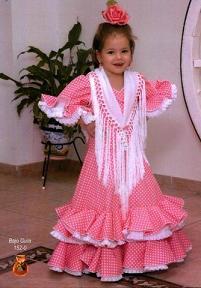
The last trend I have seen in guiris: when a family has little girls, they are wearing the traditional dress that us locals only wear on a couple of holidays a year. Definitely not on a normal day out. Besides, the dresses look odd in the children because they are supposed to be very, very tight, but the guiris wear them like you would a normal dress, slightly loose. I still haven't decided if this is all ludicrous or kind of cute.