Blogia

On Poetry and Culture Shock

Gabriel Celaya

I could have called the Pamphlet Effect “the Celaya effect”. I admire Celaya, his poetry and his ideas; the ones who make disasters are his disciples. He wrote this:

Maldigo la poesía concebida como un lujo
cultural por los neutrales
que, lavándose las manos, se desentienden y evaden.

I curse poetry understood as a luxury,
Culture in the hands of the neutrals,
Who look the other way, and get away, and flee.


He was defending the need of writing politically. Good for him.

Inga Muscio's Cunt (an example of How Not To Write)

If English is not your native language, you should know that "cunt" is the stronger swearword in the land and it means “a woman’s sexual organs” or “a person the speaker hates”. English, contrary to European Spanish, has some words so strong that very few people uses them, so no Spanish blasphemy can get close. Therefore, giving that word as a book's title, and including a brief explanation of why you prefer to use the word cunt instead of vagina, has a shock value that I cannot translate or understand.

I started reading Inga Muscio’s Cunt: A Declaration of Independence out of curiosity; I thought it would be a story of swearwords, of how perfectly ordinary words like huswyf (Old English for woman) degenerated into misogynistic ones like “hussy” (modern English to insult a woman). I forced myself to read it through because something so badly written, so full of stupid generalisations, of dangerous advice, and the occasional good joke, has a perverse appeal. Whatever you do, don’t read Cunt. It is a confused mix of opinions on issues such as contraception, abortion, prostitution, menstrual products, sex, rape and the like, that gives feminism a bad name.

The Pamphlet Effect (How not to Write part 8)

Without political literature there’d be no Iliad, Aristophanes, Plato, Milton or picaresque novel*. Denouncing injustice creatively (in fiction, in verse, in drama, in essays) is wonderful. But it’s probably the hardest genre of all because the risk of self-indulgence is higher than ever. Make sure that your ideals are not making up for bad writing. Boring, unoriginal, preachy, clichéd. Like Inga Muscio's A Declaracion of Independence, for example.

Some of the very worst poetry (and some writing, too) I’ve ever read was political, and a common mistake as big as plain bad writing is to tell how the poet feels towards an injustice. Who cares? Never assume that your reader shares your ideology. In fact, never assume that your reader is even familiar with the injustice you are reacting against. What all successful political creative writing does is either to describe the situation with a manipulative appearance of objectivity, or to give a call to action to people who haven’t realised yet of the urgency of the problem, or both. Think of “Blowing in the wind”.

*And without picaresque there would be no Fielding, and without Fielding no Jane Austen, and without Jane Austen the world would be a sad and dreary place.

The Sweet Seventeen Effect (How Not to Write, part 7)

What is a haiku? Some would say, “a haiku is a poem with seventeen syllables, 5-7-5”. Wrong! Bad! Okay, not bad. Just incomplete. My rules to write haiku are lax, and I will explain why with an example.

Sonnets. Petrarch invented (perfected?) the sonnet form in Italian. With a certain rhyme scheme, the famous “two quartets, two tercets” (4+4+3+3 = 14 lines) that Spanish readers will be familiar with. Later, when the sonnet was imported to England, after quite a lot of experimentation, the best English sonnetists figured out that a “three quartets, one couplet” (4+4+4+2 = 14 lines) structure fitted better into their language and thought. There is the Italian sonnet, and there’s the English sonnet. Not better, not worse.

That means that in Japanese a haiku is 5-7-5 and anything else is not a haiku, but in the Western world we have to make as good use as we can of languages that need more syllables to say anything (and Spanish words have on average twice as many syllables as English ones). So: first of all, a haiku in a Western language does not need to have 5-7-5 syllables. It can have more, it can have less. Say, between 14 and 21.

Now, the important bit: as a natural consequence of the Thereus Effect, a haiku in any language is NOT a haiku if it does not have some sort of natural division in syntax or meaning. At least one, maybe two, so that it can have between two and three lines.

Ezra Pound:
The apparition of those faces in the crowd:
Petals on a wet, black bough.

Two sentences. The image and the metaphor. One clear division.

Alan Spence:
First warmth of spring.
I feel as if
I have been asleep.

Two sentences. The cause and the feeling. One clear division. (I think lines 2 and 3 should be fused, but anyway).

An uncredited translation of a haiku by Issa:
Where there are humans
You’ll find flies
and Buddhas.

One sentence, but each line is one phrase, so there is no run-on effect. And each line in is violent thematic opposition with the other two.

Spanish writers of haiku, including excellent poets like Mario Benedetti, make a massacre of the form because they try so hard to fit into the 5-7-5 pattern that they sacrifice any other concern to it. A seventeen-syllable-long sentence broken into three chunks is as much as haiku as fourteen lines out of the phone book are a sonnet.

Book Day!!

I don’t like to have purely bilingual posts apart from poetry translations, but Book Day is special. Scroll down for the English version of this entry.

Mi madre siempre ha celebrado el día del libro como si fuera Navidad o el cumpleaños de un miembro honorario de la familia (la biblioteca, claro). Tengo recuerdos borrosos de Días del Libro cuando yo era muy, muy chica. Como mi madre salía del trabajo un par de horas antes de que mi hermano y yo saliéramos del colegio, iba al centro, compraba libros para ella y para nosotros, y al llegar a casa a comer era como una mañana de Reyes. Mis padres no nos hacían regalos fuera de ocasiones señaladas, y mi cumpleaños es casi en Navidad, así que esos libros eran aún más especiales por lo extraordinario de la ocasión.

Años más tarde, mi madre esperaba a la tarde del 23 de Abril o al fin de semana más cercano para llevarnos a mi hermano y a mí de librerías. Yo no devoraría libros como lo hago si no fuera por mi madre. Ahora nos recomendamos libros. Yo le digo cuáles de mis novelones victorianos le pueden gustar y ella me persiguió hasta que me leí Falsa Identidad de Sarah Waters. Que mi propia madre me dé a conocer a Sarah Waters es una buena medida de lo estupenda que es (¿cuántas madres recomiendan a sus hijas novelas de amor de escritoras lesbianas militantes?).

El sábado es el Día del Libro, y yo no voy a estar por aquí un par de días. ¿Qué le puedo recomendar hoy? Pienso en los autores que me gustan, descarto los que ya conoce, y los que no creo que sean de su estilo. Le gustó Caramelo (se lo leyó en español y le gustó tanto que me lo compró en inglés: me tiene malcriada), de una autora chicana que no recuerdo, así que allá van un par de frases de The House on Mango Street de Sandra Cisneros, también chicana:

Siempre nos dijeron que algún día nos mudaríamos a una casa, una casa de verdad que sería nuestra para siempre, y que no nos tendríamos que volver a mudar de año en año. Y nuestra casa tendría agua corriente y las tuberías funcionarían. Y por dentro habría escaleras de verdad, no para llegar a la casa, sino escaleras dentro de la casa, como en la tele. Y tendríamos un sótano y por lo menos tres cuartos de baño, para que cuando fuéramos a bañarnos no tuviéramos que avisar a todo el mundo. La casa sería blanca con árboles alrededor, un patio enorme y césped, pero sin verja. Papa hablaba de esta casa cuando tenía un billete de lotería, y Mama hablaba de la casa cuando nos contaba cuentos antes de ir a dormir.

^^^^^^^^^^^

My mother has always celebrated Book Day as if it was Christmas, or the birthday of an honorary family member (the library, that is). I have vague memories of Book Days when I was a wee child. My mother finished work about two hours before my brother and me finished school, so she would go shopping, buy loads of books for herself and for us, and when we got home it was just like Christmas morning. My parents never gave us presents outside special occasions, and my birthday is in December, so those books were more special because gifts were so rare.

Years later, my mother would wait until the late afternoon or until the weekend to take my brother and me book-shopping. I wouldn’t feed on books the way I do now without my mother’s influence. Now we recommend books to each other. I tell her which of my Victorian novels she’d enjoy and she kept insisting until I read Sarah Water’s Fingersmith, which is a good measure of my mom’s coolness (how many mothers recommend lesbian authors to their daughters?)

Book Day falls on Saturday this year and I’m not going to be around for the next couple of days. What can I recommend her today? I think of the authors I like, take out the ones she knows, and the ones that wouldn’t be her style. She likes Chicana writers (she read Caramelo in Spanish translation and got it in English for me, isn’t she a love?), so here it goes a little fragment of The House on Mango Street:

Thy always told us that one day we would move into a house, a real house with that would be ours for always so we wouldn’t have to move each year. And our house would have running water and pipes that worked. And inside it would have real stairs, not hallway stairs, but stairs inside like houses on TV. And we’d have a basement and at least three washrooms so when we took a bath we wouldn’t have to tell everybody. Our house would be white with trees around it, a great big yard and grass growing without a fence. This was the house Papa talked about when he held a lottery ticket and this was the house Mama dreamed up in the stories she told us before we went to bed.

Bridges in Seville

Los siete puentes
abrazando la ciudad,
a todos nosotros.

Our seven bridges
Hugging the city,
hugging us all.


The mantra goes:

Alamillo, Barqueta, Chapina, Triana, San Telmo, Delicias, Quinto Centenario.
A harp, a leap, a ship, a dance, a park, a road, a tower.
To Gran’s, to bars, to walk, way back, to class, to park, and trucks.

I think I’ve made myself very clear. If you know any towns where the North is to the left, of course.

Changes in the Link section

A little announcement here. I'm very conservative with the right margin of the blog; now that there are a few changes here is a comment on it. So that you know why I link what I link.

First blogs, then useful things, then my other sites. If you are frustrated by the mixing of languages, don't worry, that is the way it is supposed to be. Comments in English for sites in English, and in Spanish for sites in Spanish.

Gapingvoid started as a cartoon website. Then it became a cartoon blog. Then it slowly became a marketing blog that sometimes posts cartoons. Its creator has some good ideas about making creativity compatible with making money.

La Vidriera Irrespetuosa es el blog de Zifra (se hace llamar como el personaje de Matrix). Es temático, más o menos; me interesa cuando habla de política, de educación laica, y de chistes frikis.

Carboanion es amiga mía. Se supone que su blog no es temático; habla de literatura, de manga, y de cosas que le sorprenden o le molestan.

Neil Gaiman is a wonderful writer. The function of his blog is to keep his fans informed of what is going on in his professional life; the blog is only a section inside his personal site, which has plenty of information about his books.

Eduardo Haro Tecglen pone todas sus columnas de prensa juntas en un blog. Aquí no hay nada que no se pueda leer en los periódicos.

Knickers in a knot is a very new blog about American politics, with an emphasis in feminism, reproductory rights, and education.

La Teatral es un portal con información y recursos sobre teatro, ya sea en España o en español. Creada por los organizadores de la Feria La Teatral de teatro de calle (no os la perdáis).

I don't want to have more than one link about Middle Eastern dance. It is next to impossible to find websites that are more informative than promotional. Morocco´s site is the closest I have found to a sit that explains what "bellydance" is, instead of just trying to sell you classes or DVDs. And I've had the privilege of seeing her lecture, teach, and dance, so I can efinitely recommend anything that comes with her name on it.


My Amazon Wish List
once made a complete stranger give me a book she no longer wanted, so I like to keep it visible. You never know. My birthday is in December.

Nia's Jewelry is more a shop window than a shop. Now with photographs of some lovely Cornellians wearing my earrings, to give a better idea of how everything looks. My thanks to the models.

Erotic Literature

I like to take part in a couple of literary message boards, and in one of them someone said recently "I'm not interested in erotic literature at all. Explicit or not explicit, good or bad. Sex should not be told or read, sex should be practised". This guy is mixing unrelated stuff.

Would we say, "don't read travel literature, travel instead!"? "Don't read love stories, find love!" "don't read murder mysteries, have adventures!" "don't read political literature, go out and be an activist!" Exactly. We don't normally say those things.

Some people think that erotica is written and read as a substitute or complement of sex; it may be so, but that is not its primary function. We could argue forever what is porn and what is erotica, but for artistic purposes, the pornographic function is to arouse sexually; erotica is art that happens to have sex as a theme. "Porn consumed for its artistic qualities rather than its arousing ones". My definition is 100% subjective: porn or erotica are only functions; they are not even qualities. According to my definition, Titanic the movie, for example, has a pornografic function, at least for some people.

So, this guy from the message board is wrong because he took erotica to have an exclusively pornographic function, while it is merely art with a sexual theme. Right?

Knitters

There are a lot rares now that it's sunny, although I still see them occasionally. The knitters, sitting on benches, or waiting for the bus, or at the doors of professors on office hours. Filling dead time knitting. No, they are not little old ladies. They are Cornell students, young girls, making the most of the empty minutes between two classes.

Isn't that a great idea? I like to do things with my hands (embroidery, cooking, jewelry) but I never carry anything on me that I can do while waiting. My discman or a novel fills in that function. The first time I saw a knitting girl, I as suprised but then I thought it makes perfect sense. Let's see. It is a cheap hobby, it is portable, you choose for how long you want to do it (you cannot read three lines of a novel, stop, then read fine lines, stop...) and at the end you have something useful (you definitely need those hats and scarves in Ithaca).

Considering that a huge number of students at my home university are commuters, the surprising thing is that they don't do anything at all with their waiting time (up to three hours a day in my own experience). Oh, yes, they do something to keep their hands busy, sure. They smoke. Bleh.

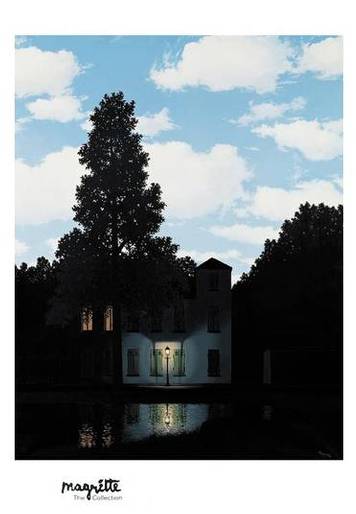
This is what I mean when I say "good free verse"

This is what I mean when I say "good free verse"

Poem by e. e. cummings, painting by René Magritte.

the hours rise up putting off stars and it is
dawn
into the street of the sky light walks scattering poems

on earth a candle is
extinguished the city
wakes
with a song upon her
mouth having death in her eyes

and it is dawn
the world
goes forth to murder dreams....

i see in the street where strong
men are digging bread
and i see the brutal faces of
people contented hideous hopeless cruel happy

and it is day,

in the mirror
i see a frail
man
dreaming
dreams
dreams in the mirror

and it
is dusk on earth

a candle is lighted
and it is dark.
the people are in their houses
the frail man is in his bed
the city

sleeps with death upon her mouth having a song in her eyes
the hours descend,
putting on stars....

in the street of the sky night walks scattering poems

Las horas se levantan apagando estrellas y
amanece
en la calle del cielo la luz camina esparciendo poemas

en la tierra una vela se
apaga la ciudad
despierta
con una canción en la
boca tiene la muerte en sus ojos

Y amanece
el mundo
sale a asesinar sueños...

Veo por las calles donde fuertes
hombres están cavando pan
y veo las caras brutales de
gente contenta horrible desesperada cruel feliz

y es de día,

en el espejo
veo un hombre
débil
soñando
sueños
sueños en el espejo

y está
anocheciendo en la tierra
se enciende una vela
y está oscuro.
la gente está en sus casas
el hombre débil está en la cama
la ciudad

duerme con la muerte en la boca tiene una canción en los ojos
Las horas caen,
encendiendo estrellas...

en la calle del cielo la noche camina esparciendo poemas.

The Thereus Effect (How Not To Write Part 6)

This is the biggest problem of free verse; it doesn’t apply to (almost) anything else. Free verse seems easy, but it’s not, among other reasons because it doesn’t have rules. Mistake: it has one!

Read your poem aloud. If the line endings do not naturally correspond to pauses in syntax, intonation, or meaning, or if the lines’ length could be distributed in another way without hurting the meaning of the poem, you have not written a poem; you’ve raped and maimed a piece of poetic prose.

A “broken lines” effect is good, only as long as it is supposed to achieve a particular effect. T. S. Eliot, no less, said that “good verse can never be free” (I’m quoting from memory here, so I might be wrong). You don’t need to make lines coincide with grammatical phrases, but if you break rules, do it to improve the effect. I suggest an experiment: forget about the line endings, write or type the whole thing as a paragraph, and read it again. How does it sound? Good? Good! Welcome to the wonderful world of poetic prose. It didn’t have to be split into little bits to be beautiful, did it?

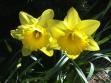
And the daffodils look lovely today

And the daffodils look lovely today

In Aberdeen (Scotland), daffodils are wild flowers, growing like weeds in unexpected places. I have seen them in a dumpster next to the railroad tracks. In Ithaca they are in the process of becoming wild, but it is still possible to guess where people planted them initially. They mostly bloom in polite lines along sidewalks, and they remind me of Aberdeen, making me homesick of a place where I never belonged.

Wordsworth’s famous daffodil poem, stereotypically Romantic, verges on Bécquer’s nauseating sentimentality. Even so, it supported me at one of the toughest times in my life. Here you have a bunch of pretty daffodils, because things are never as hard as they seem. Enjoy.

I wandered lonely as a cloud
That floats on high o'er vales and hills,
When all at once I saw a crowd,
A host, of golden daffodils;
Beside the lake, beneath the trees,
Fluttering and dancing in the breeze.

Continuous as the stars that shine
And twinkle on the milky way,
They stretched in never-ending line
Along the margin of a bay:
Ten thousand saw I at a glance,
Tossing their heads in sprightly dance.

The waves beside them danced; but they
Out-did the sparkling waves in glee:
A poet could not but be gay,
In such a jocund company:
I gazed--and gazed--but little thought
What wealth the show to me had brought:

For oft, when on my couch I lie
In vacant or in pensive mood,
They flash upon that inward eye
Which is the bliss of solitude;
And then my heart with pleasure fills,
And dances with the daffodils.

Nacho Duato on talent and expression

I adore Nacho Duato, the director and main choreographer of one of Spain's Nationall Ballet Companies. He is in charge of the one that does modern dance. After decades of experience he is beyond trying to please anyone; today he's been interviewed in El Pais and as usual he says interesting things about art and how to express it. I can't link to the original interview because it works by subscription.

P. Entonces, ese talento natural no basta...

R. No. El talento te lo tienes que buscar. Cuando vivía en Holanda, mis amigos se iban de discotecas cada fin de semana. Yo me quedaba estudiando. También iba a las discotecas, claro, pero menos. Los bailarines dejamos los estudios muy pronto y por eso tenemos que esforzarnos mucho más. Tenemos que prepararnos. Quizá tengo talento para la danza, pero lo más importante es que ese talento no se te escape. A veces es preferible la convicción al talento.

Q: So, natural talent is not enough...

A: No, it's not. Your talent is something you have to look for. When I was living in the Netherlands, my friends went clubbing every weekend. I stayed at home and studied. I went o the discos, of course, but not often. Dancers have to give up their studies soon and that's why we should work a lot harder. We have to get ready. I might have natural talent for dancing, but the most important thing is not letting that talent slip away from you. Sometimes, conviction is better than talent.

The Góngora Effect (How Not To Write 5)

This makes a lot more sense when talking of writing in Spanish, but I’ll do my best to make it understandable.

Góngora was an excellent poet, maybe a cultural equivalent of John Donne. The problem is that he used such convoluted syntax that nowadays we need a footnote translation into plain Spanish.

Literary language does not have to be harder than the non-literary. You don’t need to make sentences longer than usual. A difficult word order (in languages that are more flexible than English) is very, very tricky. Use tricks if you want to, but never think that your writing is better if the syntax is different from that of expository writing. One test is to read your work aloud and see if the natural pauses you need to make to breathe coincide with punctuation marks. A second test would be asking yourself why have you “broken the rules”. If there’s no answer, or it is nothing more specific than “it sounds better like that” “it sounds different from prose”, “just because”, mend it. The most obvious example I know of useless changes to word order is the Spanish epithet, so I will go on in that language.

No soporto, de verdad que no soporto los adjetivos colocados antes del nombre cuando no son estrictamente necesarios. Por ejemplo, Neruda sabe lo que hace cuando dice:

"Cuerpo de mujer, blancas colinas, muslos blancos”.

Para empezar, está jugando con el ritmo de la frase, y para seguir, el blanco lo rodea todo. Es un “blanco cuerpo blanco”. Hay una razón ahí. Lo que no entiendo es porqué a estas alturas hay gente que piensa que para que la poesía sea poesía es necesario anteponer los adjetivos por las buenas. Esto no es el Siglo de Oro y hacerle esguinces a la sintaxis hace siglos que ya no sube puntos. Neruda lo sabía y por eso decía “puedo escribir los versos más tristes esta noche”, ni “los más tristes versos” ni tonterías. La canción desesperada es una canción desesperada. No es una desesperada canción, y menos mal.

The Friday Cycle

A poem to order you to go out, have fun, and find love. I don't want to hear how many exams or papers you have to prepare.

1.
Dance with your eyes closed.
The smell, the music, the heat
Are all you need to see.
Baila con los ojos cerrados.
El olor, la música, el calor
son todo lo que necesitas ver.


2.
I like your blond skin
I want your blond smile.
I’m looking for some blonde fun.
Me gusta tu rubia piel
Me atrae tu rubia sonrisa
Quiero divertirme rubiamente.


3.
“How can we know the dancer from the dance?” (W. B. Yeats)
Do I dance better if you watch?
¿Cómo distinguir el baile de la bailarina?
¿Bailo mejor cuando me miras?


4.
Dawn sets the sky on fire.
Day comes to stop all parties.
Survivors crawl out.
El amanecer prende fuego al cielo.
El día llega para acabar con todas las fiestas.
Los supervivientes se van, arrastrándose.


I think that Aurora said once that she liked to be as inside as possible the creation process of other writers, so for her and anyone else who wants gossip this is the biographical note of these little babies. The only one of the four poems that didn't just come tome as a flash of inspiration was number 4. Numbers 2 and 4 came first chronologically; Number 2 I actually composed (that is, I made it up, but I wrote it down the morning after, of course) during an alcohol-soaked party and it does express the way I felt about the friend of a friend. The mutual friend, Virginia, helped the morning after with the translation, mostly with word order. Number 4 mixes the exhausted feeling after that party, which was in Limerick (Ireland), with a photograph of the sunset over Aberdeen (Scotland) and it is my attempt to turn Björk's song Pluto into a haiku. Number 1 I composed while I was dancing in a bar in Granada with my oldest friend, Irene francés; that one had been waiting to come out for ever and ever because I do dance with my eyes closed, at least when I'm really happy and relaxed. This happened a whole year after the original two party haikus, ad since I already had three I shuffled them a lot trying to compose a fourth to balance a party cycle. The answer came nearly a year afterwards, not at a party but at a Belly Dance class recital, the first time I ever danced for others to see. I composed the poem a few days afterward, and the "you" is the only friend of mine who came to see the recital. I didn't really steal the quote from Yeats, but from an analysis of him by the philosopher Paul de Man. After that it was only a question of arranging them in the order that nights out usually take: Dance, lust, dance and lust put together, home.

I first posted this haiku sequence in December. It is still called “The Friday Cycle”, a title I wasn’t too happy with. I’m still trying to get used to it. Any suggestions for a change?

The Spanish Republic

I’ll tell you a story. Once upon a time there was a country ruled by a king that was neither very old, very rich, or very wise. And there were elections to the City Councils of this country (to save time and paperwork, all Town Councils were elected at the same time) and the Republican party (meaning the anti-monarchy, absolutely nothing to do with American republicans) won the elections. Technically, to overthrow the king they would have had to win the Parliament elections, but the king thought he had overstayed his welcome and left the country (cowardice or good sense? who knows). Soon after, the Republican Party, which was a lot more lefty that socialdemocrats nowadays and a bit less radical that communists, won the Parliament and Presidential elections. They changed the Constitution and dedicated themselves to the task of improving the national school system. They had two pillars: good quality public education for all, and some hostility to religion. In this country, there had been a privileged religion that was not happy at all with its loss of status and with the new secular schools.

The Republic lasted only a few years, very few, until some very rich people, together with most of the military and with the official approval of the religion I mentioned, made a coup d’état. Then there was a war and the country’s economy and its people’s quality of life went down for decades afterwards.

When the country had a one-in-a-lifetime chance of becoming democratic and peaceful again, the grandson of the king who was neither old nor wise seemed to be an unavoidable figure that had to be put at the centre of the game board as a handful of men tried to decide the future of us all. There were a lot of compromises and the only thing that made a majority of people happy was that we were indeed a democracy –not a very peaceful one, but still. The Republicans old enough to have actually lived through all four political regimes (the old king, the Republic, the dictator, the new democracy) were probably the ones that compromised the most. After all, they had been stripped of more legitimate rights than any one else.

I’m not Republican, because I’m not against the fact that there is a king in Spain. To me, the royal family are like honorary ambassadors that didn’t need to major in Political Science at college. I don’t care one way or the other. If they are there, they might as well do a good PR job and deserve their salaries (yes, they receive a salary out of people’s taxes because they don’t have a private fortune, like, for example, the English queen). I like everything else about republicans: the importance of freedom, of public education, of secular public life, and keeping religion well off politics. And they have had better reasons than other people to make their demands by force, but we have never had Republican terrorists in Spain. Of that, I’m thankful.

Today is the anniversary of the Republican Constitution. So, Happy Birthday, Republic.

Queer Studies, Gender Studies

Queer Studies, Gender Studies

Something that I envy of American Universities is that they have flexibility in designing departments and courses. In Spain, the contents of a course’s syllabus are up to the professor or the department, but the names of the courses themselves and the University’s division in departments is fixed and can only be changed through a very slow and complex bureaucratic process. That's why most of the courses I took as an undergrad had empty names, for example “English Literary Texts 1 (2, 3, …)”, so that the professors had more freedom in choosing the content. A consequence of that rigidity is that in Spain there aren’t Gender Studies departments. We work on Gender Studies, sure, but no one even thinks of starting the process that would officially create a department under that name (I suspect that by the time the bureaucracy was over, Gender Studies would be out of fashion). Professors associate in official “research groups”, but those remain invisible from the point of view of the students.

And now there is this new concept (new for me), Queer Studies. (Warning: I use "queer" in its technical sense of "people who are not heterosexual": I don't mean only "gay" and I am not using it as an insult)

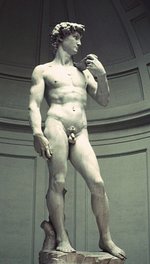
Is the label “Queer Studies” useful? I once wrote a paper defending that Renaissance women poets should be studied alongside their male contemporaries, instead of keeping the token “Women Poets” lesson on the syllabus. I still think so, and it applies to queer artists. We study Michelangelo as the sculptor and painter of the best nudes of the post-Classic world, not as a predecessor of Mapplethorpe. We study Shakespeare’s sonnets because they are excellent, not because they were dedicated to both a man and a woman. It doesn’t change the value of one comma in the Jane Austen canon to speculate that she may have been a lesbian.

Of course there are authors that are better understood in the context of their sexual orientation, or in the context of everyone else’s attitudes towards it. But I’m not sure there is really enough yet to establish courses on queer literature. Besides, undergraduates (and everyone outside academia) would get the impression that we aren’t interested in poet A or B because they are good, but because they are queer. And that isn’t doing any favours to the poet or academia.

Having said that, I think that in a generation or so there will be very clearly established queer genres, of which we have the seeds today. A love story is a love story, no matter the gender of the protagonists. But there are some things that are inherently queer. The coming out story, for example. There is a novel genre, the Bildungsroman, in which someone goes from youth to adulthood, maturing in the process, and the coming out story is a subgenre of it. For example, Oranges are not the Only Fruit by Jeanette Winterson.

A second genre would be the “gay-man-knows-he-has-AIDS-and-has-just-about-enough-time-to-say-goodbye-properly”. All the examples I can thiink of are movies, not books. A connection to “straight literature” is the death haiku: classic composers of haiku could write detached, elegant compositions about facing death calmly, peacefully. Facing the perspective of your own death without fear and drama is not a very Western thing to do.

It will take about one more generation of very talented authors to make sense of these new tendencies. And it will be important that there are good, very good authors, so good that people without the least interest in queerness are interested in their works.

Mary Dorcey and the problem of minority authors

The cover of Mary Dorcey’s The River that Carries Me, lying misplaced at the library, looked inviting. The back used words like “love” and “the struggle of women”. So I took it, and once at home I read the author’s biography inside: it said that Mary Dorcey is a lesbian.

The problem with minority authors that aren't gloriously original, classic and perfect is that the nagging question always remains: would this person be famous in their own right if he or she was not a feminist/ not white/ not Christian? Sometimes the answer is not easy: I’d rather read Christopher Marlowe than Aemilia Lanyer, but she was one of a tiny handful of Elizabethan women poets and I have to read her if only for historical reasons (meaning I’m more interested in her writings as expression of a female point of view than as art). Other times the reverse is true and a work is disregarded because it was written by a “minority” writer even though it is brilliant. Zora Neale Hurston’s Their Eyes Were Watching God is an example. The world was not ready for a black woman writer in the early 20th century.

Here is something by Mary Dorcey so that you can judge if she belongs to the “special point of view” group or to the “this is good no matter who wrote it” select club. It is a bit long, but I didn’t want to edit it to give you a better picture. I picked on purpose a poem without obvious lesbian or feminist themes.

This Day I have Turned my Back on Sorrow.

Enough of this.
I have had enough of repining,
Of loss and lament.

Enough.
I want to dance in the street.
I want laughter –
Loud days and wild nights.
I will make it up,
If I have to
Until it happens.
I will make it happen
If I have to.

I have had enough of repenting
Of loss
And lament.
I want
Dancing in the streets,
Laughter.

I will go into the fields
And under a white hawthorn tree
Dig a grave
Six foot deep.
Into it I will put
Regret and remorse.
I will cover it up,
Shovel the clay
And lay down my cross.

I have had enough
Of lament
And loss.
After all
I wrote my own story,
Chose my course.
I brought myself
To this edge of the river.

Enough.
It is over;
the sad times
the bleak.
Put behind me.
I have taken what I need –
The few things of value
Salvaged from the wreck.
I carry the in my flesh and blood
Until the last day.

Enough of loss and lament.
I want to dance in the street
I want laughter
Luminous mornings, long nights.
It is over,
Finished,
Remorse and lament
I have buried them,
Turned the clay
Six foot deep, under
The white hawthorn tree.

This day
I have turned my back
On sorrow.

Heart on a Tray

Corazón en bandeja.

No,
no voy a poner mi corazón en un poema.
No,
No en un poema como en una bandeja.
Pues entonces
ese pedacito de mí –quizá tuyo
lo leerán otros,
y otros se lo contarán a alguien.
Mi corazón que empezó mío
y luego fue tuyo
acabará repartido.
Cortado con tenedor y cuchillo.
Todos podrán compararlo con los que ya conocen:
Los otros corazones puestos en bandejas,
Pinchados sobre un panel,
Intimidades que otros incautos (no yo)
Pusieron en un poema para compartirlo.
Yo no,
prefiero no ponerlo.
No.
En un poema, no.
No es en un poema donde puedo darte mi corazón.

Heart on a tray.
No,
I’m not going to put my heart into a poem.
No,
Not into a poem as if on a tray.
Because then
That piece of me –maybe yours
Will be read by others
And others will tell someone else.
My heart initially mine
And then yours
Will end up spread
Cut up in little pieces with knife and fork
Everyone will be able to compare it with others they know
The other hearts set on trays
Pinned onto a board
Innermost thoughts that the naïve (not me)
Put into a poem they would share.
Not me,
I’d rather not.
No.
Not in a poem.
It’s not through a poem that I will give you my heart.


So this is what I wrote when I wanted to put into a poem what now I call "The Therapy Effect". The initial intention was to satirise a very dominant style among the poets in my hometown, maybe in my country as a whole, a certain melancholy-surreal mode. The effect was not exactly what I had planned.

The Beatles Effect (How Not To Write, part 4)

I like The Beatles. They’re fun. Sometimes they were good. And they were the kings of the bad rhyme. The Beatles effect is what happens when you care about rhyme so much that it destroys your poem.

I don’t have anything against rhyme. As long as it’s good. Don’t rhyme “-ing” forms, don’t rhyme “be” and “me”, “you” and “do”. If you cannot find better rhymes, and you still like very traditional forms of poetry, write blank verse. If Milton wrote Paradise Lost in blank verse, it should be good enough for you.

¿Estás leyendo esto en español? Al español el verso blanco no le pega tanto como al inglés, pero antes que rimar participios e infinitivos, siempre será mejor la rima asonante. El romancero tradicional le da cien mil vueltas a las rimas facilonas.