Blogia
On Poetry and Culture Shock

Other people\'s poetry

Happy Birthday

The first time I read this Mario Benedetti poem I was 18 or maybe 19, and I was very surprised to see a poem dedicated to someone who was specifically 28 years old. It is not a symbolic age for anything, as far as I know. At that point in my life, 28 sounded like a young age, but still, very far away from me. But of course, all birthdays (hopefully) come, and now I am 28, like the intriguing protagonist of this lovely poem.

COMO SIEMPRE 

Aunque hoy cumplas
trescientos treinta y seis meses
la matusalénica edad no se te nota cuando
en el instante en que vencen los crueles
entrás a averiguar la alegría del mundo
y mucho menos todavía se te nota
cuando volás gaviotamente sobre las fobias
o desarbolás los nudosos rencores

buena edad para cambiar estatutos y horóscopos
para que tu manantial mane amor sin miseria
para que te enfrentes al espejo que exige
y pienses que estás linda
y estés linda

casi no vale la pena desearte júbilos
y lealtades
ya que te van a rodear como ángeles o veleros

es obvio y comprensible
que las manzanas y los jazmines y
los cuidadores de autos y los ciclistas
y las hijas de los villeros
y los cachorros extraviados
y los bichitos de san antonio
y las cajas de fósforo
te consideren una de los suyos

de modo que desearte un feliz cumpleaños
podría ser tan injusto con tus felices
cumpledías

acordate de esta ley de tu vida

si hace algún tiempo fuiste desgraciada
eso también ayuda a que hoy se afirme
tu bienaventuranza

de todos modos para vos no es novedad
que el mundo
y yo
te queremos de veras

pero yo siempre un poquito más que el mundo.


AS USUAL

Even though today you are
three hundred and thirty months old
this venerable age is unnoticeable when
the instant cruel ones win
you go and discover the happiness of the world
and it is even less noticeable when
you fly seagully over phobias
or undo knotty grudges.

Good age to change laws and horoscopes
for your fountains to flow love without measure
for you to face the demanding mirror
and think you’re pretty
and be pretty.

It’s hardly worth it to wish you joys
and loyalties
because they are going to surround you like angels or ships

It is obvious and understandable
that apples and jasmine
and car-minders, and cyclers
and the daughter of farmers
and stray puppies
and ladybugs
and the boxes of matches
consider you one of them.

so to wish you a happy birthday
could be so unfair to your happy
everydays

Remember this law of your life

If you ever were miserable
that also helps to affirm 
your bliss

Anyway it’s not new to you that the world
and I
really love you

but I always love you a little bit more than the world.
Tom McGrath

I don’t have the least idea of who this guy McGrath is. I bought a second-hand anthology of Scottish poetry just because it was Scottish, cheap, and it had a few Edwin Morgan poems. It has a card from the Finger Lakes Library System Central Library (that would be a quite big area in the north of New York State), showing that no one had ever borrowed the book; the card was stamped DISCARDED. Isn’t that a pity? There’s no way of saying whether anyone ever read the book, but still, never borrowed!

Tom McGrath, Night Songs. The small letters, including the “i”, are not typos.

I
to make poems
from bricks
cities
from words

either

a conversation
with a gutter
or a song
to sweep
the streets

i continue
to eat a lot
and sleep
too little

II
yes the madwoman screams
racialism
past my window

the drunk man shouts
that the bastard o'reilly
will tonight
be knifed

yes

the city sickens the heart

gutters do talk

contraceptives and rats

I should have read Mumford
or travelled more

III
the gutters of suburbia
say no more than whispers
behind curtains

the poetry of keyholes

IV
being in the city
i am a junkyard

V
i can continue
because
the night does

regardless

Smile

I don't read much poetry lately. Real life is getting in the way. So I take my volume of "25 Young Spanish Poets" (edited in 2003) and I open it at random until I find a very short poem. I don´t especifically look for a haiku but that's what I find. The author is called Carmen Jodra.

¿Por qué sonríes?
Porque hay sol en las hojas.
¿Por qué sonríes?

Why do you smile?
Because there's sun on the leaves.
Why do you smile?


A fairy tale.

No poetry today. Here you have a fairy tale. Warning: it is from the Bluebeard, child-eating giants, bloody variety of fairy tales.

Once upon a time there was a king who had three daughters, two bad, one (the youngest) good. One day, the King said to his daughters, “I’m old and tired. I have divided the kingdom in three parts and each one of you will have her portion. I will keep a thousand men as my court and I will spend four months a year with each one of you. But first, tell me: How much do you love me?”

The oldest said, “More than my life”.

The middle one said, “More than words can express”

And the youngest one said, “As much as it is right and proper”.

The king went into a rage at tis lack of exaggeration, and he banished his youngest daughter from his castle, which made her very sad, but she was so good and beautiful that the prince in the land at her father’s borders married her, even without any dowry. The King then divided his kingdom in half, between his two remaining daughters, and said he and his thousand men would spend half the year with each one.

The king had a counsellor who was fired after defending the good daughter; this man had two sons, one good from his wife, one bad from is lover. He decided that now that he had more spare time, he would dedicate it to his older, illegitimate son, and find a way of giving him part of his inheritance. But on seeing his castle and his luxuries, the Bad Son decided to take everything and take it soon. So, he faked a letter from the Good Son and the Counsellor was made to believe that his Good Son planned to kill him. And that was how the Good Son had to run away from his house, and pretend he was Poor Tom, a mad beggar.

As soon as the king went to live with his eldest daughter, she banned the thousand men from her castle. The King was furious, but nothing he said affected her. Finally, he said he would go and live with the middle daughter. But when he arrived, she told him to go back to the eldest until his appointed time, six months later. “My sister was right. You don’t need a thousand knights, not a hundred, not one, if you have my sister’s servants to take care of you. Go back to her and apologise”

“Apologise to my own daughter? I’d sooner die of cold in that storm”

“Suit yourself”, said the middle daughter.

The King went out in the rain and was found by Poor Tom, who gave him shelter in a hut. Meanwhile, the two bad sisters realised that the thousand knights might be a danger to them and decided the needed his father back to keep him controlled. They went to the counsellor’s castle, to see if he knew anything, and were received by the Bad Son. The two women immediately desired him. They told him their plans and he said that the counsellor was too loyal to the King, so they would probably need to torture him. The Bad Son went into another room while the daughters tied the old man to a chair. When he said he didn’t know where the King was, each one of the women pulled out one of his eyes. They kicked him out of his house and they told the Bad Son that he was the man of the castle now, although they would like to have him in their army in case there was a war. The Bad Son was delighted.

Poor Tom found his father the counsellor, now blind, who didn’t recognise his son’s voice and asked him to lead him to a cliff so that he could kill himself. The Good Son led his not towards a cliff, but towards the borders of the country. The Good Daughter had found out how her sisters were treating her father, and since her husband the foreign prince loved her so much, she easily convinced him to invade her country to avenge the old King. The first battle of the war was won by the daughters, who had both become lovers of the Bad Son. He made prisoners of both the King and his daughter. The King realised what a stupid fool he had been, and considered himself lucky to be alive and with the one person that had remained true to him, his youngest daughter. But the Bad Son ordered a spy to kill them both when they were in prison.

When the eldest daughter knew that her sister was her rival, she poisoned her. Poor Tom had stayed away from the battle, taking care of his father, but when he saw his half brother, he revealed his identity and challenged the Bad Son in a duel. The Good Son won, and killed his brother. On seeing that, the eldest sister killed himself by smashing her head against a rock. Grief and exhaustion were too much for the old counsellor, who died while his sons fought. The Spy tried to fake the Daughter’s suicide; the King just saw him escape the room, and did not have time to save her. He tried desperately to bring her back to life, not believing for one moment she was truly dead. Death by sorrow found him too, surprised, denying it, unprepared.

And only Poor Tom was left alive, sad castaway in the ruins of a destroyed nation.

************************************* 

This cheery story is the plot of King Lear (I have changed a few details), maybe my favourite Shakespearian tragedy.

Trainspotting the book: a sample.

Trainspotting the book has a lot less comedy elements than the movie, and it is very hard to read because most of it is not in English, but in Edinburgh Scots. If you have never heard Scots or at least the Edinburgh accent, I don’t think you can understand the book at all. The Spanish translation is absolutely brilliant: it is written in a version of slang that is contemporary enough to sound very true, but it doesn’t try to reproduce the sounds of the vernacular: the spelling is always the standard. That is the best way of avoiding to turn Edinburgh into any specific Spanish town.

I got the book in Spanish one Christmas. When I got to the final page I started all over again. When I finished it a second time, I reread a handful of the best sections. Then I lent it, and my friend did more or less the same. Then I lent it a second time and I lost it (that’s what happens when you lend books). That was about seven years ago. Ever since then, once in a while I went to a bookshop with materials in English and I opened Trainspotting at random, to see if I understood anything. Nae, ah couldnae. But after a few years, I did, and I didn’t even remember where the difficulties had been before: that’s simply because now, after having travelled four times to Scotland (two holidays, one study, one work), the version of English I hear in my head is Scottish English. Not slang, as in the book, but it is definitely Scottish.

So that you can see what I am talking about, here you have the beginning of the novel. The translation’s mine; the published one is really good, but as I’ve said, I don’t have it with me any more.

The sweat wis lashing oafay Sick Boy; he wis trembling. Ah wis jist sitting thair, focusing oan the telly, tryin no tae notice the cunt. He wis bringing me doon. Ah tried tae keep ma attention oan the Jean-Claude Van Damme video.

Le chorreaba el sudor a Sick Boy, y estaba temblando. Yo estaba sentado sin hacer nada, viendo la tele, intentando pasar del hijoputa. Me ponía malo. Procuré concentrarme en el vídeo de Jean-Claude Van Damme.

I hate William Gibson

No, I don’t mean I dislike the way he writes. On the contrary, I like it very much. I hate William Gibson with corrosive envy. Something positive out of it is that corrosive envy is a motivation to write more poems.

The sky above the port was the color of television, tuned to a dead channel.

El cielo sobre el puerto era del color de la televisión, encendida en un canal sin sintonizar.

This sentence is the beginning of his novel Neuromancer. The expressivity! The mood-setting! The conciseness! The imagination! I hope I like the rest of the novel half as much.

Torture

To the recent rumours news that the US are keeping secret prisons in Europe, where prisoners are held indefinitely and without charges, are are probably being tortured, in violation of international law and human decency, I can start by giving you something written by the Uruguayan poet Mario Benedetti.

Un torturador no se redime suicidándose. Pero algo es algo.

Tortures will not obtain redemption if they kill themselves. Something's better than nothing, though.

Rivers.

This is what T S Eliot has to say about rivers. The first two lines made me buy the whole book

I do not know much about rivers; but I think that the river
is a strong brown god –sullen, untamed and intractable,
Patient to some degree, at first recognised as a frontier;
Useful, untrustworthy, as a conveyor of commerce;
Then only a problem confronting the builder of bridges.

No sé mucho sobre ríos; pero creo que el río
es un dios fuerte, marrón -taciturno, indomable,
paciente hasta cierto punto, descubierto primero como frontera;
útil, traicionero, cuando facilita el comercio;
y después, sólo el problema al que se enfrenta el constructor de un puente.


Because it\'s cloudy and I want a storm.

, here you have Shakespeare's King Lear, Act 2 scene 4, raging to the winds. The last two lines, in case they are not clear, are asking for all women to die and all men to become sterile. Isn't Lear a lovely man.

Blow, winds, and crack your cheeks! rage! blow!
You cataracts and hurricanoes, spout
Till you have drench'd our steeples, drown'd the cocks!
You sulphurous and thought-executing fires,
Vaunt-couriers to oak-cleaving thunderbolts,
Singe my white head! And thou, all-shaking thunder,
Smite flat the thick rotundity o' the world!
Crack nature's moulds, an germens spill at once,
That make ingrateful man!

Sopla, viento, desgarra! ¡Furia! ¡Sopla!
¡Cataratas, huracanes, derramad
hasta ahogar las torres: ahogad los gallos de las veletas!
Fuegos de azufre, que matan el pensamiento:
Mensajeros de truenos que parten en dos los robles,
¡Quemad mis blancos cabellos! Y tú, trueno estremecedor,
¡Aplasta, aplana la grosera rotundidad de este mundo!
¡Rompe los moldes de la naturaleza, destruye el germen
que crea a los hombres ingratos!

Death couplets by e. e. cummings

I don’t feel much of an impulse to write about death, the most inescapable of literary themes. I have two poems triggered by the death of Martyn Bennett , and one single little poem that looks as if it is about the death of the speaker, but it is a love declaration. Alan Spence and e. e. cummings seem to be obsessed with their own mortality; Spence has a novel all about it and cummings has lot of poems; both authors seem quite serene and calm about their respective ends. Cummings is no longer in this world, and I hope he is buried somewhere as beautiful as his poem wishes. Complete absence of rhyme in the translation; I wanted to keep the meaning so faithful that I didn’t even try the effect.

when god lets my body be

From each brave eye shall sprout a tree
fruit that dangles therefrom

the purpled world will dance upon
Between my lips which did sing

a rose shall beget the spring
that maidens whom passion wastes

will lay between their little breasts
My strong fingers beneath the snow

Into strenuous birds shall go
my love walking in the grass

their wings will touch with her face
and all the while shall my heart be

With the bulge and nuzzle of the sea


cuando dios deje mi cuerpo

De cada ojo valiente brotará un árbol
sobre la fruta que de él cuelgue

bailará el mundo apurpurado
Entre mis labios que cantaron

una rosa engendrará la primavera
que las doncellas que la pasión echa a perder

colocarán entre sus pechitos
Mis fuertes dedos bajo la nieve

entrarán en pájaros esforzados
mi amor caminando por la hierba

sus alas le tocarán la cara
y mientras tanto estará mi corazón

Con la subida y caricia del mar.

Thomas Middleton

I may have been too ambitious today; I felt like translating something very difficult, passages from a play by an English playwright of Shakespeare's time. I find Middleton irregular, and without some of Shakespeare impossible-to-grasp sparkle. But his play The Changeling is fascinating, a dark story of blackmail with the right amount of comic relief. De Flores, servant to Vermandero, wants to seduce his employer's daughter, Beatrice, who is engaged to a man against her will to marry another.

I have blended two fragments of two soliloquys by De Flores, by far Middleton's best character. There's something special about these tragedy villains. The translation takes too many liberties; the language is very hard and I was aiming too high.

I, I She had rather wear my pelt tann’d in a pair
of dancing pumps, than I should thrust my fingers
into her sockets here; I know she hates me,
yet cannot choose but love her;
no matter, if but to vex her, I’ll haunt her still;
though I get nothing else, I’ll have my will.

II,I Wrangling has prov’d the mistress of good pastime;
as children cry themselves asleep, I ha’seen
Women have chid themselves abed to men.

I, I Más quisiera ella usar mi piel para forrar
sus zapatitos, que dejarme meter los dedos
en su guante; sé que me odia,
y no hay nada que hacer, la quiero.
Da igual. La perseguiré, por fastidiarla,
la tenga o no, pues ese es mi capricho.

II, I Las peleas son las criadas del mejor pasatiempo;
igual que los niños que se duermen llorando, he visto
mujeres que refunfuñan camino de la cama.


After reading such brilliant, strong, rich, merciless, rhythmic poetry, do you have any doubt that De Flores will do exactly what he wants with Beatrice?

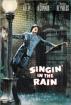
Singing in the rain

Singing in the rain It's raining heavily in my area because hurricane Vince is dangerously close to the Spanish southwest coast. Thankfully, it is losing strenght as it comes closer to us (as a bad lover would do). We had been waiting eagerly for this rain to come, and how happy it makes me reminds me of the classic, Singing in the Rain.

Gene Kelly was the best actor in the world ever, The Actor, because I never found Frank Sinatra or Fred Astaire physically attractive, and as far as I know neither Robert Redford, Paul Newman, or Brad Pitt can sing or dance (Ewan McGregor comes a close second to Gene Kelly, but loses points on lousy dress sense).

These lyrics are interesting because they were calculated to be sung by actors who didn't have exceptional voices, and so the lyrics compliment the natural pattern of the spoken sentence, to make themeasier to sing. Reciting this song as if it was a poem leads you almost naturally to the melody. But no, they are not particularly good lyrics. In this blog entry, the body of Gene Kelly is the poem. Dance on.

I'm singing in the rain
Just singing in the rain
What a glorious feeling
I'm happy again
I'm laughing at clouds
So dark up above
The sun's in my heart
And I'm ready for love

Let the stormy clouds chase
Everyone from the place
Come on with the rain
I've a smile on my face
I'll walk down the lane
With a happy refrain
Singing, singing in the rain

I'm singing in the rain
Just singing in the rain
What a glorious feeling
I'm happy again
I walk down the lane
With a happy refrain
I'm singing, singing in the rain
singing in the rain

Delirium

One my my favourite Neil Gaiman characters is Delirium. Something like the eternal core and ideal representation of Madness in the shape of a young girl in rags with a passing resemblance to Tori Amos. She used to be Delight, until she realised that things can (and do) change. When you are happy, you don’t want the world to change, right? The shock made the poor little thing go crazy and that is why she became Delirium. And she asks these questions to her older brother, Dream:

What’s the nAME OF the WORD for the precise MOment when you realize that you’VE ACTUALLY forgotten HOW it felt to make LOVE to somebODY you really Liked a long TIME AGO?

Is THERE a word FOR forgettinG the name OF Someone when YOu want to introduce them TO Someone else At the same TIME you realize YOU’ve forgoTTEN The name of tHE PERSON you’RE INTRODucing them to as well?

What’s THE NAME of The word for thinGS NOT Being the same always. You know. I’m sure theRE IS one. Isn’t there? there MUST BE a WORD for it… the thiNG that LETS YOU Know time is happening. IS there a WORD?

Del Doughty (another modern haiku writer, yay)

I met Del Doughty, a professor at Huntington College (Indiana, US), at a James Joyce conference. Being shamelessly nosy, I googled him later on and found out he wrote haikus. I emailed him about my love of very small poems. Today I'm very excited because Doughty's book Flow came in the mail. It's small and gorgeous.

I can't controlmy excitement until I read the whole pretty little thing and pick favourites, but I like these two: a teder one and one with humour.

1
my wife shows me
a small bloom
on the hyacinth
by the light of the snow

mi mujer me enseña
una florecita
en el jacinto
a la luz de la nieve


2
Leaves at their peak;
everyone I meet says "Hey,
you got a haircut!"

Hojas en su momento álgido;
todo el mundo me dice: "¡ey,
te has cortado el pelo!"

Iker Garai

Somebody lent me Botikin ("First Aid Kit") a poetry book by Iker Garai; I was curious about whether this young poet from northern Spain had any similarities with the young poets that I know, mostly from the South. Let’s see. He’s not Neoromantic or confessional/intimate. He is Neosurreal, and writes erotic poetry. Two out of four. Of course, free verse is his metre of choice, but that is so frequent that it can hardly be considered a characteristic of the major trend of Spanish young poets: Lyrical Neosurrealism.

I don’t like Neosurrealism in poetry because I find it unnecessarily hard to understand. I don’t get it, the same way that some people don’t like broccoli or Korean movies. And I rarely like political poetry because it is too easy to let the message defeat the artistic expression. One of Iker's political poems makes clear that his political views and mine couldn’t be more different, but I still like the poem because the rhythm is good. There is another poem I agree with, but I dislike the poem itself because I think it’s unoriginal.

I've picked two poems from the compilation, probably the two erotic/love ones with less surrealism. Word of warning: Iker is from a part of Spain where people are bilingual in Spanish and Basque. Basque writes the sounds in "Cat" and "quick" always with a K and Iker adds that to his Spanish spelling. The effect is of someone writing nevah, evah, strongah instead of never, ever, stronger. And also: in Spanish, "hippie" is a dress code: hippie girls (or women) are amazingly fashion-conscious, often snob and the assumption is that they are politically progressive.

PRINCESA JIPI

allí estaba ella
con sus brazos cruzados
sobre sus trozos de barro
en otra noche de taberna

estaba como puesta
entre los demás,
pensando más allá
de ser diferente.

es ke ella no corre,
se arrastra,
no ríe,
se lo guarda, lo engulle,
y casi nunca lo habla;
y al final,
entre risas y vasos
de la calle en mitad,
lo llora a balazos,
ella sola.

y yo soy el espectador lunático
sentado a ras de suelo,
en pleno teatro escenario
jugando a no ser yo.

HIPPIE PRINCESS

there she was
with arms crossed
over her chunks of clay
on another bar night

she seemed alone
in the crowd
thinking beyond
being different

The thing is that she doesn’t run,
she crawls,
she doesn’t laugh,
she keeps it in, she gulps it;
and eventually
among laughs and glasses
in the cleft street,
she weeps shooting bullets,
by herself.

And I am the lunatic in the audience
sitting close to the ground
right in the theatre
playing at not being myself.

"In this country"

Spaniards (and some foreigners) think that the Spanish Administration, or Spain as a whole, even, is an inefficient country. They think our bureaucracy is the slowest in the world and our "funcionarios", the civil servants, spend their days taking coffee breaks. Nothing ever works well in Spain in the understanding of some people. I'm no patriot, but I think this is of course a mistake (there is inefficiency in Spain, sure, but no more than in other places), and I can give several first-hand accounts of American inefficacy (and one or two British ones too).

Today I read something surprising about England. There is a tax there that charges not what you own, not what you earn, but the value of the house where you live. Many (most) people rent their homes, so this is not a tax on property. I can't think of an unfairer tax. So, lately, people's pensions have grown much slowly than the prices of houses, which means that there are old people who cannot afford to pay council tax. and at least one person has gone to jail for not paying her taxes. Yes. Jail. Not for fraud, not for forgery, not for theft. Jail for not paying taxes.

I just find that amazingly culture-shocking. And what is even more culture-shocking is that Spaniards think we should look up to countries like the UK. Wow.

Bukowski 1

I still don’t know if I like Charles Bukowski: I haven’t read enough of his works. I recently bought a book, Play the Piano Drunk Like a Percussion Instrument Until the Fingers Begin to Bleed a Bit. It’s second hand, and only after coming home and browsing quickly through it I saw this note on the table of contents, in soft pencil, next to the title “5 dollars”:

Gave to Steve Daniels on eve of move to Bulgaria at the Ritz. Aug 1995

Someone could write a novel starting from this volume of poetry. Who was Daniels? The syntax is ambiguous. Who went to live in Bulgaria: the owner of the book, or Daniels? and what made whoever it was go to live in Bulgaria? (Steve, have you googled your own name? Hi!)

I have googled for that poem "5 dollars" with no luck. I'm very curious about it. As I say, I still don't know if I like Bukowski. The legend is bigger than the poet and that's normally a bad thing. I've looked for a short poem so that you can judge too. I've taken plenty of liberties

40,000 flies.

torn by a temporary wind
we come back together again.

check walls and ceilings for cracks and
the eternal spiders.

wonder if there will be one moe
woman

now
40,000 flies running the arms of my
soul
singing
I met a million dollar baby in a
5 and 10
store


Arms of my soul?
flies?
singing?

What kind of shit is
this?

It's so easy to be a poet
and so hard to be
a man.

40.000 moscas.

Destrozados po un viento pasajero
volvemos juntos, otra vez

inspeccionamos paredes y techos en busca de grietas y de
las eternas arañas

me pregunto si volverá a haber una
mujer

Ahora
40.000 moscas recorren los brazos de mi
alma
cantando
"Conocí a una tía de puta madre en un
todo a
cien"

¿los brazos de mi alma?
¿moscas?
¿cantando?

¿Qué coño es
esto?

Qué fácil es ser poeta
y qué difícil es ser
hombre.

A little lullaby

A lullaby for everyone who is waiting for better times. And it comes with a little story, too.

Once upon a time there was a young woman who had done many different creative things, always as part of one collective or another. One day she got tired of the well-known faces, she thought she needed to find her own voice, and forced herself to change. She moved to a different country where everything, language, climate, everything, was different. The culture shock was extremely painful, or at least that is the way she remembers it. She made few, but good friends. Our of her pain and homesickness she created with their help something beautiful, unique, that at the time seemed small. Being a sincere and original work, it became (relatively) successful. I’m talking about Björk.

Björk has done few things that were as good as her first album. Some of her later songs are better than any individual song in "Debut", but as a whole this is probably the best one. This is my favourit song out of it; it’s so straightforward that I don’t think it needs a translation.

one day
it will happen
one day, one day
it will all come true

one day
when you're ready
one day, one day
when you're up to it

the atmosphere
will get lighter
and two suns ready
to shine just for you

I can feel it, I can feel it.

one day
it will happen
one day. one day
it will all make sense

one day, one day
you will blossom
one day, one day
when you're ready

an aeroplane
will curve gracefully
around the volcano
with the eruption that never lets you down

I can feel it, I can feel it.

and the beautifullest
fireworks are burning
in the sky just for you

I can feel it, I can feel i.

one day
one day

Another New Orleans song

Carboanion says that posting song lyrics is blogging degree zero; she considers it lazy, a form of cheating. But I can't think of anything but Hurricane Katrina, and of the destruction it's bringing, and I don't want to do any political rants. So, song lyrics about New Orleans it will have to be.

This is one of the earliest Sting songs I remember. I was seven when the album came out, and my father was already a Police fan, so I became a Sting fan more or less at that time. Many, many years later I found out that the song was inspired by the book "Interview with the Vampire".

I can't accept that the places the song and the book mention don't exist any more.

Moon Over Bourbon Street.


There’s a moon over bourbon street tonight
I see faces as they pass beneath the pale lamplight
I’ve no choice but to follow that call
The bright lights, the people, and the moon and all
I pray everyday to be strong
For I know what I do must be wrong
Oh you’ll never see my shade or hear the sound of my feet
While there’s a moon over bourbon street

It was many years ago that I became what I am
I was trapped in this life like an innocent lamb
Now I can only show my face at noon
And you’ll only see me walking by the light of the moon
The brim of my hat hides the eye of a beast
I’ve the face of a sinner but the hands of a priest
Oh you’ll never see my shade or hear the sound of my feet
While there’s a moon over bourbon street

She walks everyday through the streets of new orleans
She’s innocent and young from a family of means
I have stood many times outside her window at night
To struggle with my instinct in the pale moon light
How could I be this way when I pray to God above
I must love what I destroy and destroy the thing I love
Oh you’ll never see my shade or hear the sound of my feet
While there’s a moon over bourbon street.

Hurricane Katrina and art

I'd rather talk about politics, but this is not a "welcome to LaGuiri's opinions" blog. Who ever listen to anyone else's political opinions, and, who cares about what I think? I'm only a poet. The destruction of New Orleans is also tragic for art lovers; so much music, so many stories in a single place.

I might do a series of New Orleans-related song lyrics. Yesterday I found out that my beloved Ani DiFranco was recording what was meant to be her next album; she & her people had time to evacuate, but she has lost her home, her studio and worst of all, the reconrdings that would become that album. The Ani equivalent of my computer crashing with all its poems inside. I know that there are people dying but in a tragedy so huge, only the loss of small things has any measure.

This Ani song has nothing to do with anything; it's a coincidence that it mentions a wave. It's just a beautiful love (sex?) song that I'm listening to a lot lately. I admire the way she defines two personalities with three words.

today we are only whatall is nice about us
today we turned on in the blue light of dawn
and made love
and you were not a dot dot dot
waiting for me to complete you
and it was like i just forgot
to measure everything that i do

we woke up with the notion
that enough is not enough without more
and then we pushed with one motion
like the ocean heaves a wave at the shore
and you were not a dot dot dot
leaning forward expectantly
and i was not in such a rush
to insure my autonomy

Hoy hemos dado sólo lo mejor de nosotros.
Hoy encendimos la luz azul del amanecer,
y hemos hecho el amor.
Tú no eras una línea de puntos
esperando a que yo te completase
y para mí fue como olvidarme
de medir todo lo que hago.

Nos despertamos pensando
que "suficiente" no basta
y entonces empujamos en un solo movimiento
como el océano que empuja una ola hasta la playa
Y tú no eras una línea de puntos
esperando ansioso
y yo no tenía prisa
por asegurar mi independencia.